

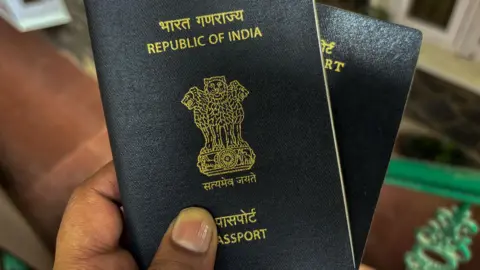
In recent months, an online clip by an Indian travel influencer complaining about the limited power of the Indian passport gained massive traction across digital platforms.
He mentioned although neighbouring countries such as Sri Lanka and Bhutan offered easier access of travelers from India, securing travel permits for visiting many nations in Europe and the West remained a challenge.
Such concerns regarding India's poor passport strength was reflected in recent global passport ranking, which placed the country at position eighty-five among 199 countries, five spots lower compared to the previous year.
Officials in India have not issued a statement on the report so far.
Nations including Rwanda, Ghana and Azerbaijan with much smaller economies than India – a nation that is the world's fifth biggest economy – are ranked higher on the index at the 78th, 74th and 72nd spots, in that order.
Actually, India's rank over the last ten years has hovered in the 80s, falling to ninetieth place two years ago. Such standings appear poor when measured against other Asian countries like Japan, South Korea and Singapore, all maintaining leading ranks.
Global Passport Power Measures
The power of a passport reflects a nation's soft power and global influence. It also translates into enhanced travel freedom for passport holders, improving commercial and learning opportunities. Limited passport power results in more paperwork, increased visa expenses, fewer travel privileges and extended processing periods when journeying.
But despite the drop in position, the count of nations providing visa-free travel to Indians has grown over the last ten years.
For example, eight years ago – the year the current administration's ruling party assumed office – 52 countries provided visa-free access for Indian passport holders and its passport at seventy-sixth position on the index.
The following year, it fell to eighty-fifth place, then rose to 80th over the past two years, declining once more to the 85th position this year. Meanwhile, countries allowing visa-free travel for Indians increased from fifty-two eight years ago to 60 in 2023 and 62 in 2024.
Increasing Worldwide Travel Competition
The count of visa-free destinations this year (57) is higher than what it was eight years ago (fifty-two), but the country's position for both these years remains at eighty-fifth. So, why is that?
Experts say that a major reason is the increasingly competitive landscape in international travel – indicating that countries are forming more travel partnerships to benefit their citizens and economic growth. According to a 2025 report, the global average count of countries travellers are able to access without visas has almost doubled from 58 in 2006 to 109 in 2025.
For example, China has expanded the number of visa-free destinations available to its citizens from fifty to eighty-two over the last ten years. Consequently, its rank on the index has improved from 94th to 60th during the same time period.
In comparison, India – previously positioned 77th on the index during summer – dropped to eighty-fifth place in October after losing access of two nations.
Additional Factors Affecting Passport Strength
A former Indian ambassador notes multiple elements that affect the strength of a country's passport, including its economic and political stability plus its openness to welcoming citizens from other countries.
For example, the US passport has fallen from the top ten and now occupies twelfth place – a historic low – because of its more inward-looking approach in global affairs.
The diplomat recalls that during the seventies, Indian citizens had visa-free travel to numerous European and Western nations, though this shifted after the Khalistan movement during the eighties. Subsequent political upheavals have continued to damage at India's image as a stable, democratic country.
"Numerous nations are also becoming more cautious regarding migrants," he stated. "India has a high number of citizens emigrating to other countries or overstaying their visas and that interferes with the country's reputation."
Elements such as how secure a country's passport is and immigration processes also play a role in gaining visa-free entry to other countries.
Enhanced Security Measures
The Indian passport faces ongoing security threats. In 2024, authorities detained over two hundred individuals for suspected passport and visa irregularities. The country also has cumbersome immigration procedures with lengthy timelines of visa processing.
The former ambassador indicated that new technologies, such as the newly introduced digital passport or e-passport, can improve security and ease the immigration process. The e-passport contains a microchip holding biometric information, increasing difficulty to counterfeit or alter the passport.
However, increased diplomatic efforts and travel partnerships continue essential for enhancing the global mobility of Indians and, by extension, India's passport ranking.
