


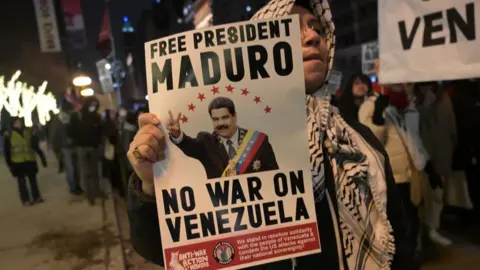
On Monday morning, a handcuffed, jumpsuit-clad Nicolás Maduro exited a armed forces helicopter in Manhattan, surrounded by federal marshals.
The Caracas chief had been held overnight in a notorious federal detention center in Brooklyn, prior to authorities transferred him to a Manhattan courthouse to face criminal charges.
The top prosecutor has stated Maduro was delivered to the US to "face justice".
But jurisprudence authorities challenge the lawfulness of the government's maneuver, and argue the US may have infringed upon international statutes concerning the armed incursion. Domestically, however, the US's actions occupy a juridical ambiguity that may nonetheless lead to Maduro being tried, despite the circumstances that delivered him.
The US insists its actions were legally justified. The administration has charged Maduro of "drug-funded terrorism" and facilitating the movement of "thousands of tonnes" of cocaine to the US.
"All personnel involved operated with utmost professionalism, firmly, and in strict accordance with US law and official guidelines," the Attorney General said in a official communication.
Maduro has consistently rejected US accusations that he manages an narco-trafficking scheme, and in the courtroom in New York on Monday he pled of innocent.
International Legal and Enforcement Concerns
Although the charges are centered on drugs, the US prosecution of Maduro comes after years of censure of his governance of Venezuela from the broader global community.
In 2020, UN investigators said Maduro's government had perpetrated "grave abuses" constituting crimes against humanity - and that the president and other top officials were implicated. The US and some of its allies have also alleged Maduro of rigging elections, and did not recognise him as the legitimate president.
Maduro's claimed links to drugs cartels are the focus of this legal case, yet the US procedures in bringing him to a US judge to face these counts are also being examined.
Conducting a military operation in Venezuela and whisking Maduro out of the country secretly was "completely illegal under global statutes," said a expert at a institution.
Scholars highlighted a series of issues stemming from the US operation.
The United Nations Charter prohibits members from armed aggression against other countries. It authorizes "self-defence if an armed attack occurs" but that threat must be imminent, analysts said. The other exception occurs when the UN Security Council approves such an intervention, which the US failed to secure before it acted in Venezuela.
International law would regard the drug-trafficking offences the US accuses against Maduro to be a criminal justice issue, experts say, not a act of war that might warrant one country to take armed action against another.
In public statements, the government has characterised the mission as, in the words of the top diplomat, "essentially a criminal apprehension", rather than an hostile military campaign.
Historical Parallels and US Legal Debate
Maduro has been indicted on drug trafficking charges in the US since 2020; the Department of Justice has now issued a superseding - or new - formal accusation against the Venezuelan leader. The executive branch argues it is now executing it.
"The mission was carried out to aid an active legal case linked to widespread narcotics trafficking and related offenses that have incited bloodshed, created regional instability, and been a direct cause of the drug crisis killing US citizens," the AG said in her statement.
But since the apprehension, several scholars have said the US broke global norms by extracting Maduro out of Venezuela without consent.
"One nation cannot invade another independent state and detain individuals," said an expert on global jurisprudence. "In the event that the US wants to apprehend someone in another country, the proper way to do that is extradition."
Regardless of whether an defendant faces indictment in America, "The United States has no authority to travel globally enforcing an arrest warrant in the territory of other ," she said.
Maduro's legal team in the Manhattan courtroom on Monday said they would contest the propriety of the US mission which transported him from Caracas to New York.
There's also a long-running legal debate about whether presidents must comply with the UN Charter. The US Constitution views treaties the country signs to be the "supreme law of the land".
But there's a well-known case of a previous government claiming it did not have to observe the charter.
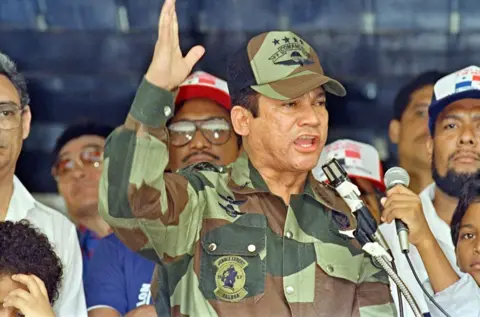
In 1989, the George HW Bush administration ousted Panama's strongman Manuel Noriega and extradited him to the US to answer illicit narcotics accusations.
An confidential Justice Department memo from the time argued that the president had the legal authority to order the FBI to apprehend individuals who broke US law, "regardless of whether those actions breach customary international law" - including the UN Charter.
The writer of that document, William Barr, was appointed the US AG and issued the original 2020 charges against Maduro.
However, the memo's logic later came under questioning from legal scholars. US federal judges have not directly ruled on the matter.
US Executive Authority and Jurisdiction
In the US, the question of whether this operation violated any US statutes is complicated.
The US Constitution vests Congress the authority to commence hostilities, but puts the president in command of the military.
A 1970s statute called the War Powers Resolution establishes constraints on the president's ability to use military force. It compels the president to consult Congress before deploying US troops into foreign nations "in every possible instance," and inform Congress within 48 hours of committing troops.
The administration withheld Congress a prior warning before the operation in Venezuela "because it endangers the mission," a senior figure said.
However, several {presidents|commanders
